
(Ecommerce Store Growth Strategy) Starting an ecommerce business looks simple from the outside. Many people believe that launching a store, adding products, and running advertisements will quickly generate sales. However, the reality is very different. A large number of ecommerce stores fail before reaching their first 100 orders.
This failure is not usually caused by bad products. In most cases, it happens because the store is not prepared for customers. Successful ecommerce brands focus on strategy, store optimization, and customer experience before they spend money on marketing.
Understanding the reasons behind early failure can help new store owners avoid costly mistakes and build a strong foundation for long term growth.
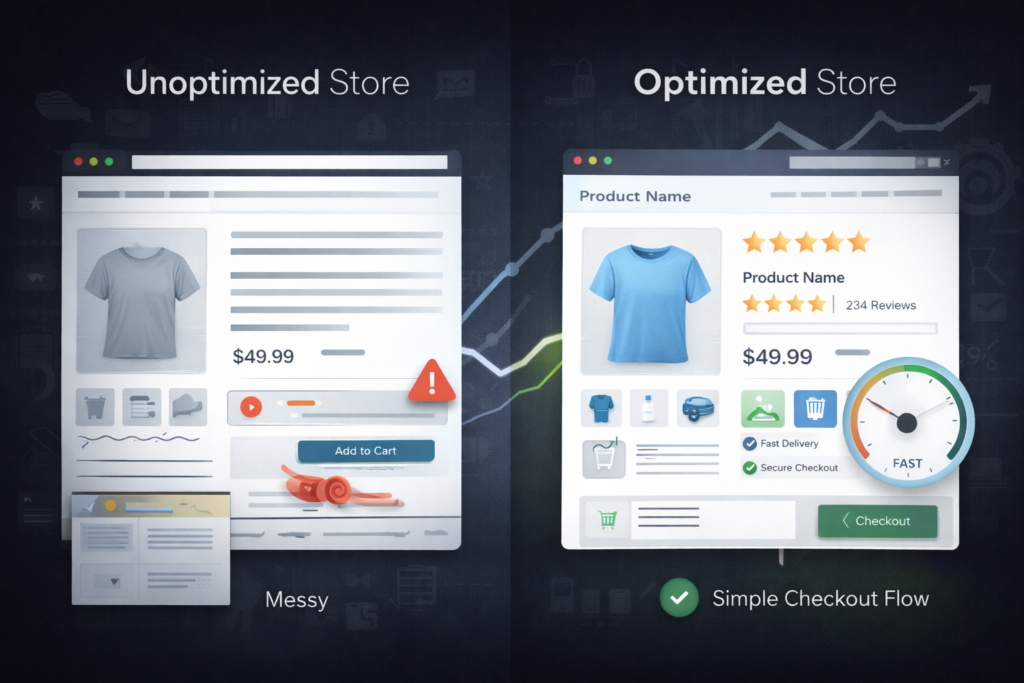
Poor Store Structure and User Experience
One of the biggest reasons ecommerce stores fail is poor website structure. When visitors arrive at a store, they expect a smooth and professional experience. If the website looks confusing, slow, or untrustworthy, customers leave within seconds.
A successful ecommerce store must have a clear layout, easy navigation, and well organized product pages. Customers should quickly understand what the store sells and how they can buy the product. If they struggle to find information, they will move to a competitor.
Store design also affects credibility. Clean product images, proper descriptions, and trust signals can significantly increase conversion rates.
Weak Product Pages
Many store owners underestimate the importance of product pages. A product page is where the final purchase decision happens. If this page is poorly designed, even the best marketing campaign will fail.
A strong product page should include high quality images, clear benefits, detailed descriptions, and customer reviews. It should answer every possible question a buyer might have.
Professional ecommerce brands also add trust badges, shipping information, and return policies to remove customer doubts. These small elements build confidence and increase the chances of conversion.
No Customer Trust Signals
Trust is one of the most important factors in online shopping. New ecommerce stores often launch without reviews, testimonials, or credibility indicators. This creates hesitation for potential buyers.
Customers want proof that a product works and that the store is reliable. Reviews, ratings, and real customer feedback help build that confidence.
Even simple trust signals such as secure checkout icons, clear contact information, and professional branding can improve credibility and reduce cart abandonment.
Slow Website Performance
Website speed is another critical factor in ecommerce success. Studies show that if a website takes more than a few seconds to load, visitors leave the page immediately.
Slow loading pages are often caused by large images, poor hosting, or unoptimized website structure. This not only affects user experience but also harms search engine rankings.
Optimizing website performance, compressing images, and using reliable hosting can significantly improve both customer experience and search visibility.
Lack of a Clear Marketing Strategy
Many new store owners jump directly into advertising without building a proper marketing strategy. Running ads without optimization usually results in wasted budget and low conversion rates.
A successful ecommerce strategy combines several channels such as search engine optimization, content marketing, social media promotion, and marketplace exposure.
Stores that invest in long term organic growth often achieve more sustainable results than those relying only on paid ads.
Final Thoughts
Building a successful ecommerce store requires more than just launching a website. The most profitable brands focus on store optimization, customer trust, and strategic marketing before scaling their advertising efforts.
When the foundation of the store is strong, reaching the first 100 orders becomes much easier. After that point, growth becomes a process of improving conversion rates, expanding product offerings, and building customer loyalty.
For entrepreneurs who want to build a profitable ecommerce brand, the key is preparation, optimization, and continuous improvement.
If you are planning to launch or optimize your ecommerce store, focusing on these fundamentals will help you avoid common mistakes and build a stronger online business.