If you run an online store, you know the feeling. Traffic is rolling in. Visitors browse your products. But when it comes time to hit “Buy Now,” they vanish. Your conversion rate sits stubbornly below 3%-maybe even closer to the global average of 2.5–3% in 2026.
That means for every 100 people who land on your site, only two or three actually buy. The rest? They add to cart, hesitate, and bounce. It’s not just frustrating,it’s expensive. Paid ads, SEO efforts, and email campaigns all go to waste when the final step fails.
The good news? You don’t need a complete website overhaul or a massive marketing budget to turn this around.
Artificial intelligence (AI) is quietly revolutionizing ecommerce, turning average stores into conversion machines. From hyper-personalized recommendations to instant chat support that feels human, AI can identify exactly where your funnel leaks and plug those holes in real time.
In this post, we’ll break down the most common reasons your store isn’t converting, then show you exactly how AI solves each one with practical examples, real results, and beginner-friendly tools you can start using today. By the end, you’ll have a clear roadmap to boost your conversion rate without guessing.The Usual Suspects: Why Most Ecommerce Stores Fail to ConvertBefore we talk solutions,
let’s diagnose the problem. Here are the top reasons stores bleed conversions in 2026:
- Slow loading times and poor mobile experience
Shoppers are impatient. A one-second delay in page load can slash conversions by 7%. And with over half of ecommerce traffic coming from mobile, a site that isn’t thumb-friendly is dead in the water. - Complicated checkout and hidden costs
Mandatory account creation, surprise shipping fees, or a multi-step checkout process kill momentum. Cart abandonment rates hover around 70% industry-wide, and unexpected costs are often the culprit. - Lack of trust signals
No reviews, no security badges, vague return policies visitors smell risk and leave. - Weak product pages and information
Blurry images, generic descriptions, or no size guides mean shoppers can’t picture themselves owning the product. - No personalization
Everyone gets the same homepage, same recommendations, same offers. In a sea of choice, generic feels forgettable. - Ineffective search and navigation
If customers can’t find what they want in seconds, they bounce. Poor site search is a silent conversion killer. zoovu.com - Pricing and competition issues
Shoppers compare prices in real time. If yours feels off or competitors offer better bundles, they’ll leave.
These problems aren’t new but the tools to fix them are. Enter AI.How AI Turns Browsers Into BuyersAI doesn’t just automate tasks; it understands behavior, predicts intent, and personalizes every touchpoint.
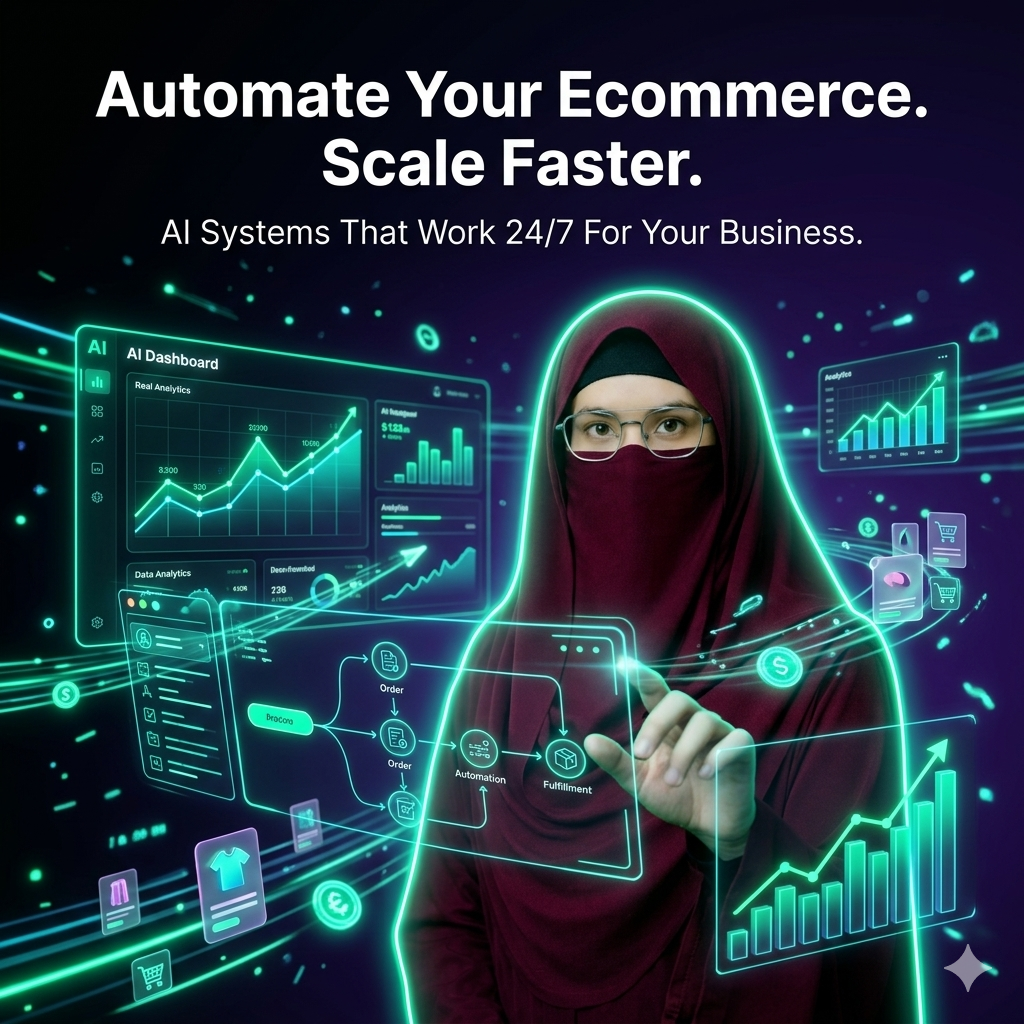
Here’s how leading stores are using it to crush conversion rates.
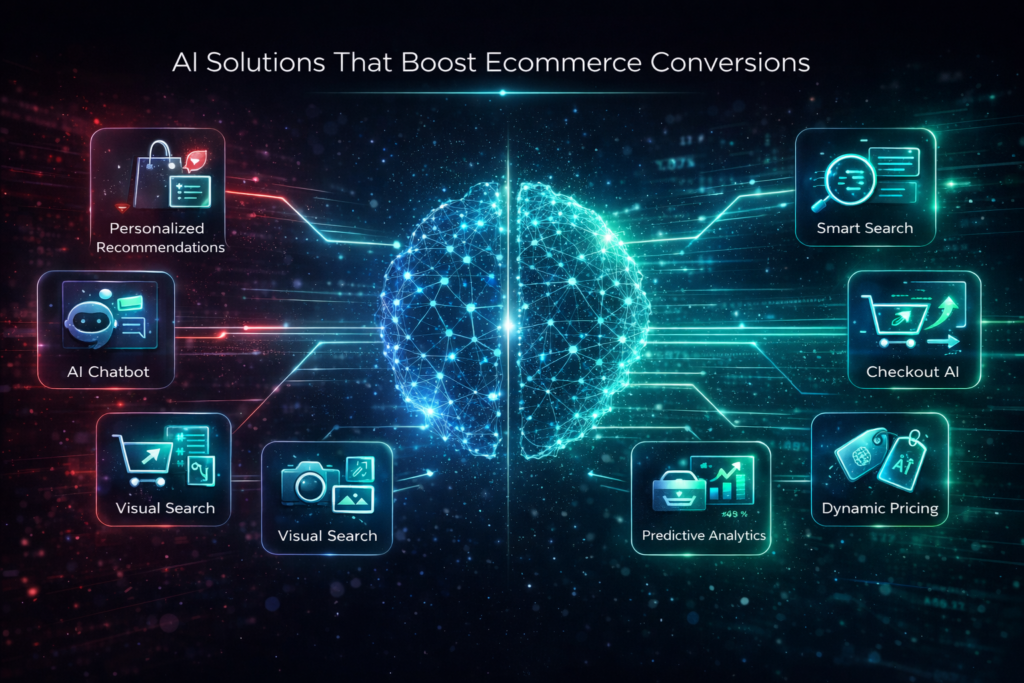
1. Hyper-Personalized Shopping ExperiencesGeneric product recommendations are out. AI analyzes browsing history, past purchases, time on site, and even mouse movements to show each visitor exactly what they’re likely to love.
- Result? Personalized recommendations can lift revenue by 10–15% on average, with top performers seeing up to 25%. envive.ai
- Tools like Nosto or Rebuy use machine learning to dynamically swap banners, suggest bundles, and adjust pricing in real time. A fashion store might show winter coats to a cold-weather visitor while displaying lightweight jackets to someone in a warmer climate.
One global retailer saw a 23% lift in recommendation-driven revenue within 90 days after switching to AI-powered engines.
growth-engines.com
2. Intelligent Search and DiscoveryTraditional search is keyword-based and often useless. AI-powered search (think Algolia or similar tools) understands natural language, synonyms, and even visual intent.
- Shopper types “cute red dress for summer wedding” → AI surfaces matching items with perfect filters already applied.
- Decathlon achieved a 50% increase in conversion rate for personalized search queries using AI. growth-engines.com
Visual search is even better: upload a photo of an outfit, and AI finds similar products in your catalog.
3. AI Chatbots and Shopping Assistants That Actually ConvertForget clunky rule-based bots. Modern AI assistants (like those from Tidio, Crescendo.ai, or Envive) hold natural conversations, answer sizing questions, suggest alternatives, and even complete purchases inside the chat.
- Real impact: Stores using AI chat see conversion rates jump from 3.1% to 12.3%—a 4x increase. Shoppers also complete purchases 47% faster. anchorgroup.tech
- They handle 80% of routine queries 24/7, freeing your team while never sleeping.
4. Friction-Free Checkout with Predictive AIAI can:
- Auto-fill addresses and payment details based on past behavior.
- Detect hesitation (e.g., lingering on the shipping page) and offer instant discounts or free shipping.
- Suggest one-click upsells that feel helpful, not pushy.
Bloomreach and similar platforms use AI to optimize checkout flows, leading to measurable drops in abandonment.
5. Continuous A/B Testing and Predictive Optimization Manually testing button colors and headlines is slow. AI tools like Moonshot AI analyze thousands of data points and autonomously run experiments.
- Luxury skincare brand DefenAge used it to boost conversion rate by 14%, average order value by 14%, and revenue per visitor by 30%. forbes.com
AI doesn’t just test—it predicts what will work based on your specific audience.
6. Smarter Content and Visuals AI generates high-quality product descriptions, lifestyle images, and even video demos tailored to each segment. Tools like WearView or Shopify Magic handle product photography variations at scale, making every listing more compelling.Real Stores, Real Results
- Sephora: AI virtual try-on and personalized recommendations drove an 11% conversion lift and 30% higher engagement. dragonflyai.co
- North Face: Weather-aware AI assistants increased click-through rates by 60%. dragonflyai.co
- Smaller Shopify stores using no-code tools like Rebuy or Klaviyo report 15–30% conversion gains within months. envive.ai
These aren’t outliers. They’re the new baseline for stores that embrace AI.Getting Started: No-Code AI Tools You Can Launch This WeekYou don’t need a developer or six-figure budget.
- Shopify Magic (free with Shopify): AI-generated descriptions, email subject lines, and product recommendations.
- Rebuy or Nosto: Plug-and-play personalization for upsells and bundles.
- Tidio or similar AI chat: Set up in under an hour; starts at low monthly fees.
- Alia Popups or Instant.so: AI-powered popups and landing pages with zero coding. aliapopups.com
- Klaviyo: AI email and SMS flows that feel personal.
Start small: Install one personalization tool and one chatbot. Track results for 30 days using Google Analytics or your platform’s built-in dashboard. Then layer on more.Pro tip: Focus first on your highest-traffic pages (homepage, category, product, and checkout). That’s where AI delivers the fastest ROI.The Future Belongs to AI-Powered StoresEcommerce in 2026 is no longer about who has the best products it’s about who creates the best experience. AI levels the playing field so even small stores can compete with giants.If your conversion rate is stuck, the problem isn’t your products or your traffic. It’s friction, guesswork, and one-size-fits-all experiences. AI removes all three.Ready to stop leaving money on the table? Pick one AI tool from the list above, implement it this week, and watch your numbers climb. Your store has the potential to convert at 5%, 8%, or even higher AI just gives you the shortcut.What’s one area of your store you want to optimize first?